









Causes of a Protruding Abdomen:
Patients come to us because their analysis is that they have a “fat” abdomen. They often show me what they are bothered by squeezing and pinching a large portion of their belly. Our own analysis of their complaints starts by subdividing the problem into its root causes as follows:
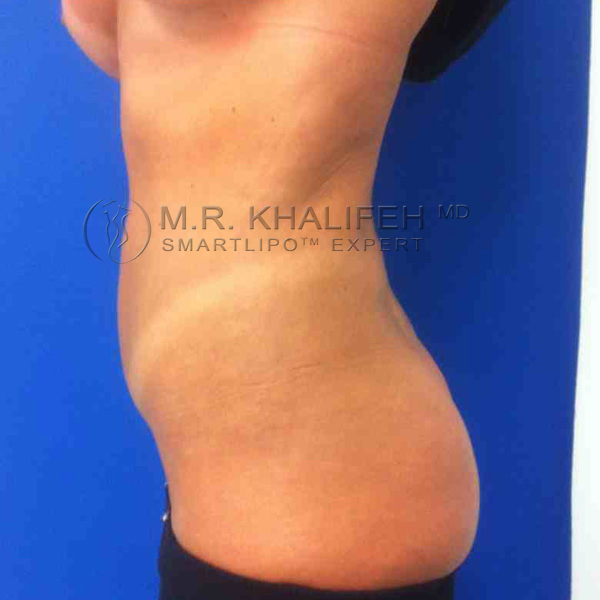
Superficial Abdominal Fat: The superficial abdominal fat is the fat located below the skin but above the abdominal muscles (see figure one below). This is the area that is most readily treatable with liposuction (and closely associated procedures such as laser lipo, J plasma lipo, and VASER liposuction). The most important changes you will see if you decide to undergo a liposuction procedure is changes to the superficial fat layer. The more fat this layer contains, the more it contributes to the unsightly appearance that is bothering a patient.
A good candidate will typically have a noticeable fat pocket sitting between the skin and the muscle layer. With liposuction, the instruments are inserted below the skin and stay above the abdominal muscles and are used to thin out this area, producing a flatter appearance. Thinner cannulas are used to thin out the level above the scarpas fascia to protects skin from irregularity, and thicker ones can be used in layer below the scarpas fascia where fat can be removed more aggressively.

The next cause of abdominal protrusion is laxity of the abdominal muscles, also known as rectus muscle diastases. The primary cause of this looseness is of course pregnancy. The muscles are designed to make space for the enlarged uterus during pregnancy and after pregnancy a certain degree laxity remains. The more weight is gained during pregnancy especially multiple pregnancies the more stretched out these muscles become and the less likely they are to fix themselves at the end of the pregnancy. This condition of separation of the abdominal muscles is called rectus muscle diastasis and occurs when the two abdominal recti muscles which are usually fused at the midline become separated and the layer between them is a thin layer that cannot hold back what is behind it. Rectus muscle diastasis will make the abdominal organs and visceral fat bulge out since there is no strong layer to keep them tucked in.
It is important to note that rectus muscle diastasis is not fixed by liposuction and pre-existing rectus muscle diastasis makes people a bad candidate for liposuction but good candidates for a tummy tuck. To learn more about a tummy tuck click: Tummy Tuck Washington DC
The final cause of unhappiness with abdominal protrusion skin laxity creating a pooch of tissue beneath the belly button. Note that the lower abdomen tends to contain more subcutaneous fat than the upper abdomen. This creates a pouch of tissue caused by a combination of excess skin and excess subcutaneous fat. This pouch of tissue will improved to a certain degree with liposuction and laser liposuction as the subcutaneous fat is stripped. The skin retraction will vary from patient to patient and the skin laxity cannot be completely eliminated with liposuction alone. Despite this inherent limitation, many patients will still be satisfied with a well performed procedure because it will decrease the pouch visibility especially in clothing but they have to be educated that the pouch cannot be eliminated. For the patch to be more completely eliminated has to be cut away skin and fat and that can be done during a tummy tuck procedure. Energy devices such as the smartlipo laser liposuction device and the j-plasma device can stimulate the skin to retract and tighten, although this effect will not replace the benefits of a tummy tuck if the skin excess is great.

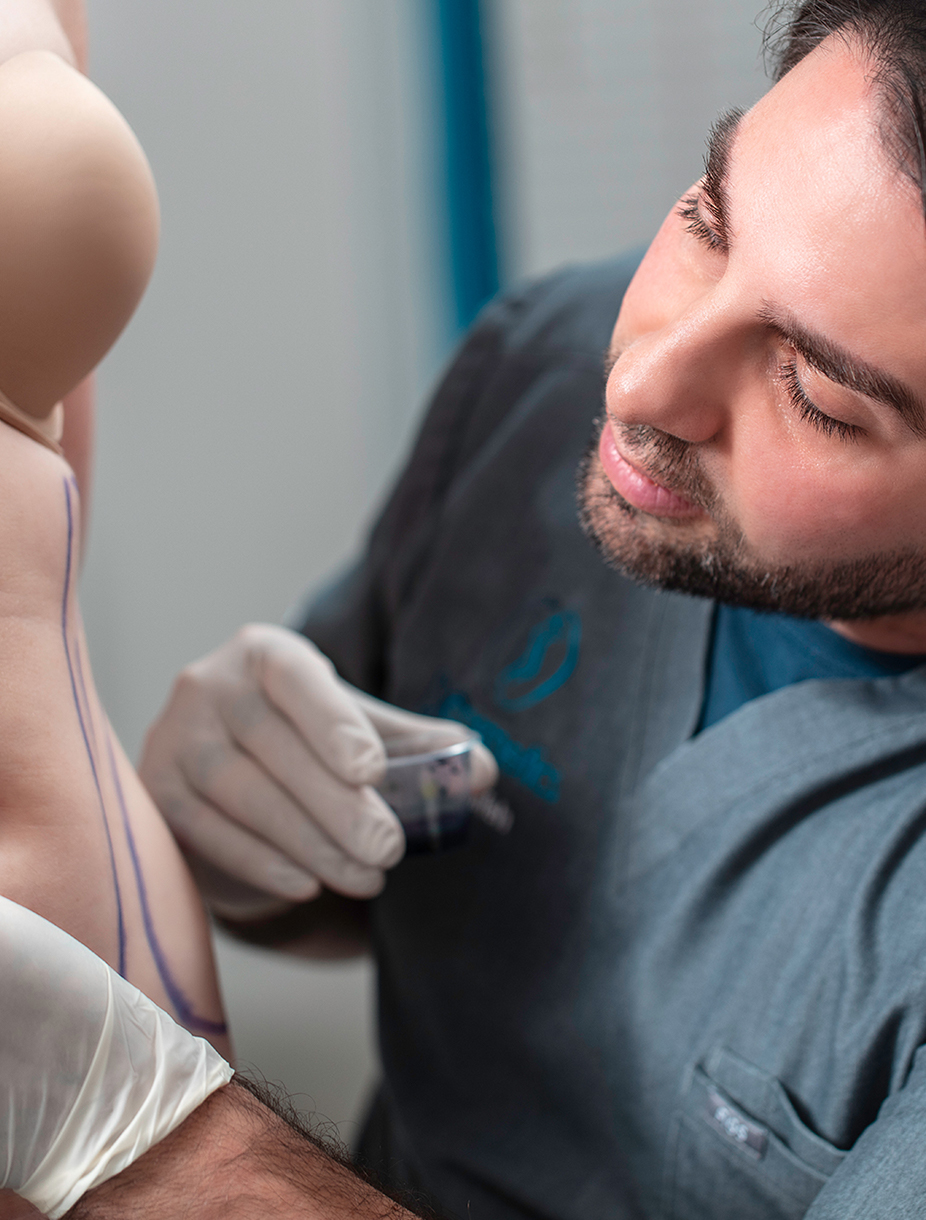
Dr. Khalifeh Demonstrates Abdominal Liposuction
Risks of abdominal liposuction

What other body areas are commonly combined with abdomen liposuction:
The most common area to be combined with abdominal liposuction is typically the love handle or lower back flank region. This combination is used to give a narrow waistline in a 360 degree fashion. In addition to often adding the lower back/flank to the abdomen, we recommend treating the full abdomen, rather than just the lower half, even when most of the fat is in the lower half. Subdividing the abdomen into two sections in patients that have mainly a lower abdomen pouch is tempting however overtime the areas that have been treated will become noticeably different than the areas that haven’t been treated.
We will sometimes do other areas that bother the patient as well, such as arms, thighs, chin….The most important determinant on what can be treated at the same time is related to the volume of fat removed. Our surgeons will help assess any areas that bother you, and if the volume does not seem excessive, they can be typically combined. We do however remind patients not to try to “lose” weight using liposuction, ie, don’t do too much liposuction. One or two areas is preferred, as the fat may go elsewhere if you don’t keep the weight off.